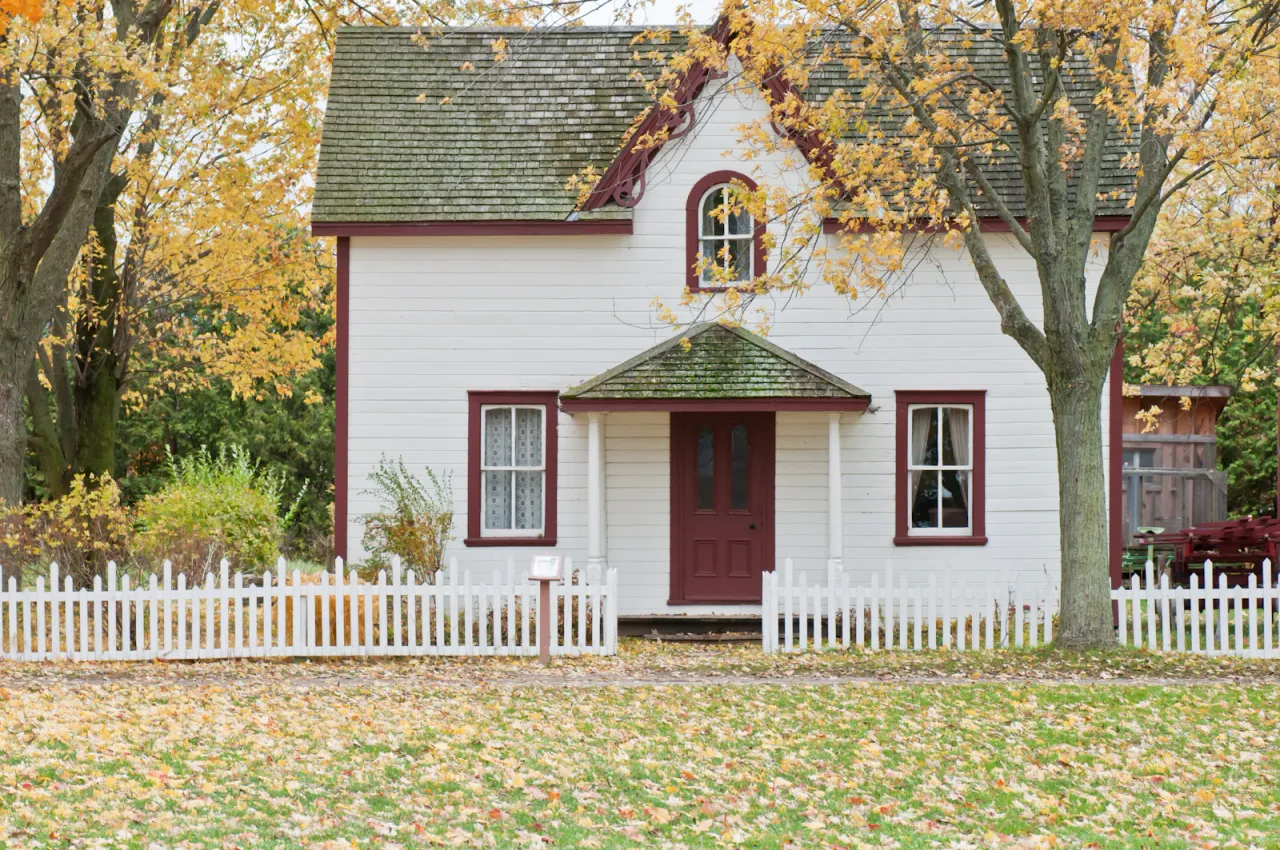
I had a homeowner in Garner sit at our conference table last month with a contractor’s estimate for $87,000. He wanted my honest read on whether the renovation made sense before listing. The answer was no, and the math is worth walking through. Selling house as-is NC 2025 is a different calculation than it was three years ago, and the homeowners who learn the new math save themselves from real losses.
I will give you the framework I use, three real Triangle examples with numbers, and the cases where renovating still wins.
When does selling as-is beat renovating in NC in 2025?
When the renovation scope tops $30,000, the property has a single major issue that scares financed buyers, or the seller has no time and no capital to manage a project. With current 6.7% mortgage rates compressing buyer affordability, the price lift from a renovation rarely covers the cost plus carrying time. The math favored renovation in 2021. It usually does not in 2025.
The Renovation ROI Question Has a Different Answer in 2025
Three years ago, a Triangle homeowner could spend $40,000 on a kitchen and bath refresh and reasonably expect $55,000-$65,000 of price lift on a list. The market was tight, financed buyers were aggressive, appraisals stretched, and the buyer pool absorbed cosmetic upgrades fast.
The 2025 market is different in three specific ways.
Buyers are rate-sensitive. With mortgage rates running near 6.7% per the FRED 30-year fixed series, monthly payment is the gating factor for most financed buyers, not the granite counter or the new vanity. A buyer who can afford $3,400/month does not pay $30,000 more for a renovated kitchen; they shop a price tier down.
Contractor pricing has not normalized. Triangle GC labor rates ran up 30-40% from 2020 to 2023 and have not come down. Materials are off the 2022 peak but well above 2019. Your $40,000 kitchen project is a $58,000 kitchen project at current numbers, and that gap eats the ROI.
Days-on-market has lengthened. Solid product still moves, but a renovated mid-tier home that would have sold in 11 days in 2021 sits 35-45 days now. Holding cost during the renovation plus holding cost during the longer listing period eats further into the return.
The math that worked in 2021 does not work in 2025 in most cases. That is the headline.
When Selling As-Is Wins
Three categories of Triangle homes are usually better off going as-is in the current environment.
Homes with deferred maintenance over $30,000 in scope. The renovation cost compounds. Touching a kitchen often opens electrical work, a master bath remodel surfaces plumbing issues, and a roof replacement reveals decking problems. The homeowner who budgets $30,000 for “freshen it up” frequently spends $50,000-$60,000 by the end.
Homes with a single major issue that scares financed buyers. A 30-year-old roof, a foundation crack, a panel that needs replacement, polybutylene plumbing, an old septic: any of these can knock a financed deal off the table even if the price is right. Conventional, FHA, and VA appraisals do not all treat these the same way, and a financed buyer’s lender can require repairs as a condition of closing.
Homes where the seller does not have time, capital, or appetite for the project. This is the category I see most. An out-of-state heir of a inherited property does not want to manage a contractor remotely. A divorcing couple under NCGS § 50-20 cannot agree on whether to invest in renovation. A tired landlord with a 2002 rental in Durham does not want to dump $40,000 into a property he has been managing for 20 years.
A Real Garner Example
The Garner homeowner I mentioned at the start. 1,950 sq ft brick ranch, built 1978, original kitchen, original primary bath, 22-year-old roof, original HVAC (replaced once in 2008, on borrowed time), good bones, decent lot.
The contractor’s estimate broke down: kitchen $34,000, primary bath $21,000, secondary bath $14,000, paint and floors $11,000, miscellaneous $7,000. Total $87,000. The seller assumed he could list at $385,000 fully renovated against a current as-is value he estimated at $295,000.
I pulled comps. Renovated 1,900-2,000 sq ft homes in his immediate area were closing $355,000-$370,000 in the prior 90 days, with 30-50 days on market. Solid as-is comparables were $285,000-$305,000.
Run the numbers. Spend $87,000, hold 4-5 months for the renovation (HELOC interest, taxes, insurance, utilities, call it $7,500 in carrying cost), list with a 5.5% commission and seller closing costs (call it $25,000 on a $365,000 sale). Net to seller: $365,000 - $87,000 - $7,500 - $25,000 = $245,500.
Our cash offer was $278,000, close in 12 days, no commission, no holding cost, no contractor anxiety. Net to seller: $278,000 minus standard seller-side closing costs of about $3,500 = $274,500.
The cash offer netted him $29,000 more than the renovate-and-list path, with five months of his life back. We closed three weeks later. He moved to Wilmington.
That is the math, and that math repeats across most of our 2025 file.
A Real Durham Trinity Park Example
Different story. 1925 bungalow in Trinity Park, 1,650 sq ft, two beds plus a bonus, one bath, original heart-pine floors under bad carpet, slate roof in fair condition, dated kitchen.
This one I told the seller to list. Trinity Park has a buyer pool that pays for charm, and the renovation cost was relatively modest: $42,000 for a kitchen, paint, refinish floors, light electrical. Comps for renovated Trinity Park bungalows were $585,000-$630,000. As-is comps were $445,000-$475,000.
The math the other direction. Spend $42,000, hold 3 months ($4,500 carrying), list at $599,000, sell for $585,000 with $40,000 in commission and seller costs. Net: $585,000 - $42,000 - $4,500 - $40,000 = $498,500. As-is cash offer would have been around $440,000, netting roughly $436,500.
The renovation netted him $62,000 more on a manageable scope in a buyer pool that rewards the upgrade. He listed in February, closed in April. Right call.
The pattern: high-end neighborhoods with charm-driven buyer pools still reward thoughtful renovation. Mid-tier suburban product mostly does not anymore.
A Real Cary Example
A landlord with a 2001 colonial in Cary, 2,650 sq ft, builder-grade everything, last touched cosmetically in 2009. He had been running it as a rental for 14 years and was done.
His agent had pitched him on $48,000 of pre-list work to get to a $620,000 sale. As-is, the agent thought $545,000. We came in with a cash offer of $542,000 and a 14-day close.
His renovation math: $620,000 - $48,000 - $5,000 carrying - $43,000 commissions and costs = $524,000.
Our cash math: $542,000 - $3,500 closing costs = $538,500.
Cash netted him $14,500 more, with 90 days saved and no contractor management. He took our offer. Closed in 11 days. We held the property for 8 months, did the renovation in-house at our actual cost (around $34,000, not $48,000), and sold it for $605,000 in November. Both sides got a deal that worked.
That is the structural reason cash buyers can pay competitive numbers in mid-tier product right now. We do the renovation cheaper than a homeowner running a one-off project, and we do not pay seller-side commission. The savings are real and we share some of them with the seller.
When Should I Renovate Instead of Selling As-Is in NC?
Renovate before selling when three conditions hold. First, the neighborhood has a buyer pool that pays for renovation: generally inner-city historic, established higher-end suburbs, or strong school districts with active buyer competition. Second, the renovation scope is bounded under $50,000 with no major mechanical or structural surprises likely. Third, you have the time, capital, and appetite to manage a 2-4 month project. Miss any one of those and the as-is path usually wins.
What Cash Buyers Actually Do With the Property
The fairness question I get asked most: am I leaving money on the table by selling as-is?
The honest answer is sometimes yes, sometimes no, and the math above shows when it is which. In a Trinity Park bungalow, you are likely leaving money on the table. In a Garner ranch with $87,000 of needed work, you are not. The renovation cost would have eaten the upside.
Cash buyers like us make a margin on the deals where the gap between as-is value and post-renovation value exceeds the cost of renovation plus our hold time and capital cost. That gap is real. We are not buying because we are smarter; we are buying because we have the in-house renovation operation, the capital to hold, and the appetite for projects that homeowners do not want to run.
For a thorough framework on the inherited property decision, the framework above usually applies.
NC-Specific Considerations
Property condition disclosures in North Carolina are governed in part by NCGS § 47E and the Residential Property Disclosure Act. Sellers must disclose known material defects on a standard form unless they qualify for an exemption. Cash sales are sometimes exempted in narrow circumstances, but the safe practice is full disclosure either way. The NC Real Estate Commission publishes the current form.
For a tired-landlord situation, the tired-landlord path often dovetails with the as-is sale framework: most landlord exits in 2025 are as-is sales because the rental property has accumulated 10-20 years of deferred maintenance and the landlord has no interest in funding a renovation on the way out.
What I Tell Sellers At The Conference Table
If your renovation budget is under $25,000, the work is mostly cosmetic, your neighborhood pays for upgrades, and you have the time, list it. List it well, list it properly, list it with someone who knows what they are doing.
If your renovation budget is over $40,000, your home has a mechanical or structural issue that will scare financed buyers, your neighborhood is mid-tier suburban, or you do not have the time and appetite, the as-is cash path is usually better. The 2025 numbers favor it.
The middle case ($25,000-$40,000 of work, decent neighborhood, willing seller) is genuinely a coin flip. We will run the math both ways and tell you what we see.
If you want a real cash number for your home with a written breakdown of what we are paying for and why, call (984) 983-5018 or reach out through the contact page. We will look at it within 48 hours.